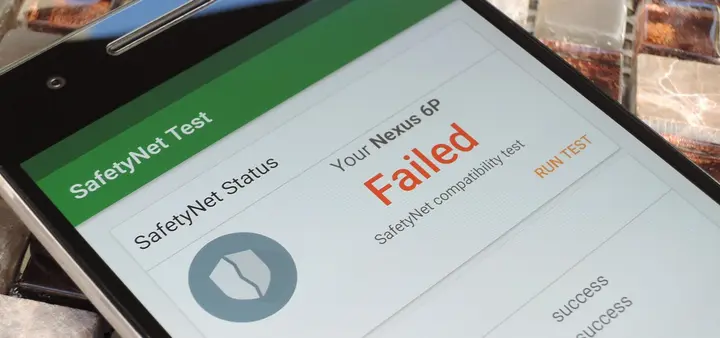
Did you root your phone, and now your banking app or Google Wallet refuses to work?
You're not alone. Rooting lets you customize your phone however you want, but some apps check whether it has been modified, and they stop working when it has.
Short answer: the check behind this, SafetyNet, has been retired. Its replacement, the Play Integrity API, has been much harder to fool since May 2025.
When I first wrote this in 2017, that check was called SafetyNet, and the app everyone complained about was Android Pay.
Android Pay is gone too. Tap to pay now lives in Google Wallet.
Below, I'll explain what SafetyNet was, what replaced it, and what that means for your rooted phone.
Also Read: What to Do After Rooting Android: 10 Useful Things
TL;DR
- SafetyNet is retired. Google replaced it with the Play Integrity API, which checks the app, the account and the device.
- Since May 2025, an unlocked bootloader fails the device check on Android 13 and newer. You can't root most phones without unlocking the bootloader.
- Each app decides how strict to be. Play Integrity doesn't block anything by itself. Google's Wallet help page says the Google Wallet app won't work on a rooted device.
- Check your status in the Play Store with "Play Protect certification" and the Play Integrity check.
- Don't rely on hiding root for bank or payment apps. It can break with the next update, and it can go against app terms.
What Is SafetyNet?
SafetyNet was a set of checks that came with Google Play services. Apps used it to ask Google one simple question: Is this phone safe and unmodified?
It looked for things like root, an unlocked bootloader and signs of malware. It also checked whether your phone had passed Google's Android Compatibility Test Suite, the set of tests a phone must pass to ship with the Play Store.
If the answer was no, apps like Android Pay and many banking apps refused to run.
Remember Pokémon Go? It worked fine on rooted phones at first.
Then it stopped, because people were using root to cheat.
What Replaced SafetyNet?
Google's developer site says the SafetyNet Attestation API is deprecated and has been replaced by the Play Integrity API. Play Integrity does the same job, but it checks more.
When an app asks, Google sends back answers about three things:
- The app: Is this the real app from Google Play, or a modified copy?
- The account: Did you install or buy this app from Google Play?
- The device: Is this a genuine, certified Android phone?
The device answer is the one that matters for rooted phones.
Play Integrity Device Labels at a Glance
Your phone gets one or more of these labels:
| Label | What it means |
|---|---|
| Strong integrity | A genuine, certified phone that also had a security update in the last year (Android 13 and newer). |
| Device integrity | A genuine, certified phone. On Android 13 and newer, the phone's hardware has to prove that the bootloader is locked and that it's running the maker's certified software. |
| Basic integrity | A real, physical Android phone. The bootloader can be locked or unlocked. |
| No label at all | Signs of an attack or a compromised system, or not a real phone (like an emulator). |
Device integrity is the one every app gets by default. Basic and strong integrity are extra labels that developers have to switch on.
What Changed With Hardware-Backed Checks?
This is the big one. In May 2025, Google made Play Integrity use hardware-backed signals on every phone running Android 13 or newer.
Your phone's secure hardware now reports whether the bootloader is locked. Google says the device integrity check requires the bootloader to be locked, and the Android version on it has to be a certified image from the phone's maker.
So on Android 13 and newer:
- An unlocked bootloader fails device integrity. And you can't root most phones without unlocking the bootloader.
- A custom ROM usually fails it too, because it isn't the maker's certified software.
- A rooted phone can still get basic integrity, as long as its hardware attestation works.
- An old security patch costs you strong integrity. You need a security update from the last year.
Also Read: 7 Best Android Custom ROMs That Are Still Updated in 2026
Why Do Some Apps Still Work on My Rooted Phone?
It's up to each developer. Google says Play Integrity doesn't block anything by itself.
It just hands the app the answers, and the developer decides what to do with them.
So a game might only care that you're on a real phone. A banking app might want device integrity or even strong integrity.
Google Wallet is clear about it. Its help page says the Google Wallet app won't work on a rooted device.
Can You Still Hide Root?
In the SafetyNet days, hiding root was a common trick, and it worked for a long time.
Today, it's a cat-and-mouse game. Root-hiding modules and spoofing tricks still exist, but the checks now lean on your phone's secure hardware.
Google also says it changes a phone's verdict when it sees signs of abuse or compromised keys. A trick that works today can break with the next update.
My advice? Don't rely on it for your bank or payment apps, since hiding root from those apps can also go against their terms.
One more thing: my old post sent you to a "Magisk Manager" website, and that wasn't the official one. Magisk's GitHub page is the only official source for Magisk downloads.
Also Read: How to Install Magisk on Android: A Step-by-Step Guide
How to Check Your Phone's Status
In 2017, I recommended apps like SafetyNet Helper Sample to test your phone. SafetyNet's check has been replaced, so those apps don't tell you much anymore, and one of them isn't even on Google Play now.
Here's how to check today, using only the Play Store.
Check Play Protect Certification
- Open the Google Play Store.
- Tap your profile icon at the top right.
- Tap "Settings" → "About".
- Look under "Play Protect certification".
If it says your device isn't certified, you'll see a "Fix device issue" button. Tap it and follow the steps on screen.
Check Your Play Integrity Result
The Play Store has a hidden developer menu that runs the real Play Integrity check.
- In the Play Store, tap your profile icon → "Settings" → "About".
- Tap "Play Store version" seven times. This unlocks developer mode.
- Go back to "Settings" → "General" → "Developer options".
- Under "Play Integrity", tap "Check integrity".
You'll see which labels your phone gets.
Why Do Apps Fail on a Phone That Isn't Rooted?
In 2017, I told you this could happen because of malware, or because your phone didn't pass Google's tests. That's still partly true.
Google's Play Store help lists these common reasons a phone fails its certification:
- The phone is rooted.
- The bootloader is unlocked.
- It runs a modified version of Android.
If you bought a used phone, the last owner may have unlocked or modified it. And if your phone hasn't had a security update in over a year, apps that ask for strong integrity may turn it down.
Try the "Fix device issue" button first. If that doesn't help, take the phone to the maker's service center.
Which Option Should You Choose?
It depends on what matters more to you:
| Your priority | What to expect | What to do |
|---|---|---|
| Banking and Google Wallet | The bootloader has to stay locked, and the phone needs the maker's certified software. | Keep the phone unmodified and install security updates. |
| Keeping root | Device integrity fails, so some apps may refuse to run. | Accept that trade-off, and don't rely on hiding root. |
| A phone that suddenly fails | Strong integrity needs a security update from the last year, and a used phone may already be unlocked or modified. | Check Play Protect certification, then tap "Fix device issue". |
Final Thoughts
SafetyNet is gone, but the idea behind it is stronger than ever. The Play Integrity API checks your phone's hardware, and since May 2025, an unlocked bootloader can't pass the device check on Android 13 and newer.
So before you root, decide which matters more to you: root, or apps like Google Wallet and your bank. On most phones, you can't fully have both.
Google can also change how it checks devices, so a trick that works today may not work after the next update.
FAQs
Why does my banking app stop working after I root my phone?
Banking apps decide how strict to be. On Android 13 and newer, an unlocked bootloader fails the Play Integrity device check, so the app may refuse to run.
What replaced SafetyNet?
Google replaced the SafetyNet Attestation API with the Play Integrity API. It checks the app, the account and the device, and the app decides what to do with the answers.
Can I hide root from Google Wallet?
Google's Wallet help page says the Google Wallet app won't work on a rooted device. Hiding root is a cat-and-mouse game that can break with the next update, so don't rely on it.
How do I check whether my phone passes Play Integrity?
Open the Play Store, tap your profile icon, then go to "Settings" → "About" and tap "Play Store version" seven times. Under "Play Integrity" in "Developer options", tap "Check integrity" to see your labels.
Still stuck? Tell me through the contact page.

Topics
Comments (2)
Comments are closed. Have a question about this article? Ask through the contact page.


Is there anyway to bypass this security feature?
You can install Magisk Manager on your device