 TechVerge
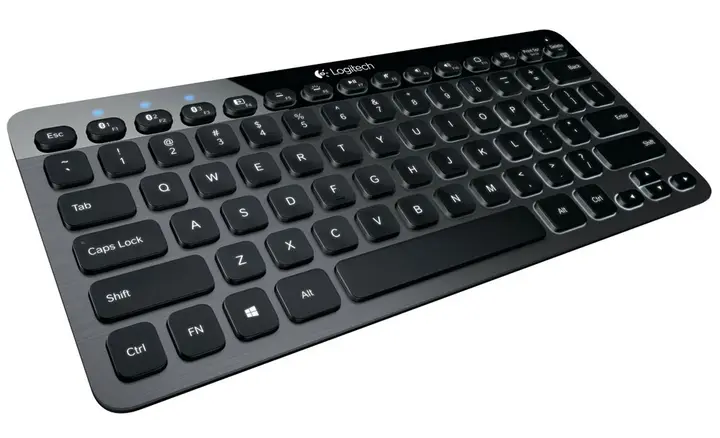
Ever wondered why the letters on a computer keyboard aren't in alphabetical order?
A, B, C would be so much easier, right? Instead, we got Q, W, E, R, T and Y.
The quick answer: the QWERTY layout came from Christopher Latham Sholes's typewriter, and it took years of changes to get there. The typewriter-jam story most people repeat is only a popular explanation.
When I first wrote this in 2017, I told it the way most of the internet tells it. Typewriters kept jamming, so the letters were mixed up.
It turns out that part is a lot less certain than it sounds. So I've rewritten this with what historians actually know, and which parts are myths.
Also Read: How Does WhatsApp Make Money? Businesses, Ads and WhatsApp Plus
TL;DR
- The name: QWERTY comes from the first six letters on the top row: Q, W, E, R, T and Y.
- The first layout: Christopher Latham Sholes's first typewriter model had the letters in alphabetical order.
- The standard: Sholes kept moving the keys around for years, and Remington's changes gave us the layout we use today.
- The jam story: the typebar-jam explanation is popular, but nobody can prove it's the reason. QWERTY was not designed to slow you down.
- Other layouts: Dvorak and Colemak exist, but for most people, sticking with QWERTY makes the most sense.
Why Is It Called a QWERTY Keyboard?
Look at the top row of letters on your keyboard. The first six are Q, W, E, R, T and Y, and that's where the name comes from.
Your phone's keyboard uses the same layout. Not because it's the best one, but because that's what everyone already knows.

Who Invented the QWERTY Keyboard?
The layout came from Christopher Latham Sholes, a printer and newspaper editor in Wisconsin, in the United States.
He built one of the first typewriters in the United States with the help of his friends Carlos Glidden and Samuel W. Soulé.
He filed for a patent in October 1867.

Was the First Keyboard in Alphabetical Order?
Yes, it was. Sholes's first model had piano-like keys in two rows, with the letters in alphabetical order:
- 3 5 7 9 N O P Q R S T U V W X Y Z
2 4 6 8 . A B C D E F G H I J K L M
He then kept moving the keys around over the next few years.
- In November 1868, he flipped the second half of the alphabet, N to Z.
- By April 1870, he had four rows, with the vowels A, E, I, O, U and Y moved up to the top row.

Looks weird, doesn't it?
How Did QWERTY Become the Standard?
In 1873, Sholes's backer, James Densmore, sold the rights to make the typewriter to E. Remington and Sons.
Remington's mechanics made a few more changes, like moving the R key into the spot where the full stop used to be. That gave us almost exactly the QWERTY layout we use today.
Remington started selling the Sholes and Glidden typewriter in 1874.
The layout really took off with the Remington No. 2 in 1878, the first typewriter that could type both capital and small letters using a Shift key.
Once people learned to type on it, nobody wanted to learn again. And that's still true today.
Also Read: Meet the Man Who Spent 9 Hours Pressing the Arrow Key to Reach the Bottom of an Excel Sheet!
Did QWERTY Stop Typewriters from Jamming?
This is the story you'll hear everywhere, and it's the one I told in 2017.
The idea goes like this. Early typewriters had metal arms (typebars) that swung up to hit the paper.
If you pressed two keys that sat close together too quickly, the arms could hit each other and get stuck. So letters that often appear together were placed far apart.
One caveat: nobody can prove that's why the letters ended up where they did. It's a popular explanation, but it may not be the real one.
There's another theory, from researchers Koichi and Motoko Yasuoka in 2011. They suggested the letter groupings grew out of feedback from American telegraph operators who used Morse code.
The honest answer? Sholes changed the layout many times, for more than one reason, and we don't have a neat explanation for every key.
Was QWERTY Designed to Slow You Down?
No. This one is a myth.
Some people say QWERTY was made to slow typists down so the machine wouldn't jam.
But putting common letter pairs far apart often means your two hands take turns. That can actually help you type faster.
Can You Type "TYPEWRITER" on the Top Row?
Yes! Try it.
T, Y, P, E, W, R, I, T, E, R. Every letter is on the top row: Q W E R T Y U I O P.
There's a popular story that Remington did this on purpose, so salespeople could impress customers by typing the brand name using only one row.
It's a fun story. Sadly, nobody has proven it's true.
Is There a Better Keyboard Layout Than QWERTY?
There are a few. Here are the best-known ones.
| Layout | Who designed it | Key detail |
|---|---|---|
| QWERTY | Christopher Latham Sholes | The layout your phone's keyboard uses, and the one most people learned |
| Dvorak | August Dvorak and William Dealey | Patented in 1936, with the vowels on the home row |
| Colemak | Shai Coleman | Released January 1, 2006, and keeps most QWERTY keys in place |
| QWERTZ | Not a new layout | Used on German keyboards, where Z and Y swap places |
| AZERTY | Not a new layout | Used on French keyboards |
Dvorak
August Dvorak and his brother-in-law William Dealey designed this layout, and it was patented in 1936.
It puts the vowels on the left side of the middle row (the home row), where your fingers rest.
Windows has included it since Windows 95, and Macs since Mac OS 8.6.
Is it faster? People still argue about it.
A 1956 US government study found it was no more efficient than QWERTY. Later studies suggest trained typists end up at similar speeds on many layouts.
Colemak
Colemak was released on January 1, 2006, by Shai Coleman.
It keeps most of QWERTY in place and moves 17 keys. Its official site says only two keys move between hands, and shortcuts like Ctrl+Z, X, C and V stay where they are.
That makes it easier to switch to than Dvorak.
Colemak's site says it's built into Mac, Linux and newer versions of Windows 11. On older Windows versions, you download it.
QWERTZ and AZERTY
These aren't new layouts, just versions of QWERTY.
German keyboards use QWERTZ, where Z and Y swap places. French keyboards use AZERTY.
Should You Switch to a New Layout?
My honest opinion? For most people, no.
Learning a new layout takes weeks, and every other keyboard you touch will still be QWERTY.
But if you type all day and you're curious, Colemak is the easier one to try.
Also Read: How to Say 'Hello World' in 26 Programming Languages
Final Thoughts
The first keyboard was in alphabetical order.
Sholes moved the keys around for years, Remington finished the job, and the Remington No. 2 made QWERTY the layout everyone learned.
The typewriter-jam story might be part of it, but nobody can prove it. And no, it wasn't made to slow you down.
For most people, sticking with QWERTY is still the sensible choice. If you're curious about a change, Colemak is the easier one to try.
Share this with the friend who's still telling the jam story as a fact.
FAQs
Why aren't the letters on a keyboard in alphabetical order?
The layout came from Christopher Latham Sholes's typewriter. He kept moving the keys around for years, and Remington's later changes gave us the QWERTY layout we use today.
Did the QWERTY layout stop typewriters from jamming?
Nobody can prove it. The jam explanation is popular, but a 2011 theory from researchers Koichi and Motoko Yasuoka points to feedback from American telegraph operators who used Morse code.
Was the first typewriter keyboard in alphabetical order?
Yes. Sholes's first model had two rows of keys with the letters in alphabetical order, and he changed the layout until it reached four rows by April 1870.
Is Dvorak faster than QWERTY?
People still argue about it. A 1956 US government study found Dvorak was no more efficient than QWERTY, and later studies suggest trained typists reach similar speeds on many layouts.
Still stuck? Tell me through the contact page.