 TechVerge
Ever downloaded an app from a developer's website and been asked to pick ARM, ARM64 or x86?
If you had no idea which one to choose, you're not alone.
In short: a recent phone is almost always ARM64, and a Windows PC is x64 or, more and more, Arm.
When I first wrote this in 2017, it was a poll. I explained the three types and asked you which one your phone had.
Comments and polls are closed on the new site, so I've turned it into a simple guide. In it, you'll learn what these names mean, how to check yours in a minute, and why the answer matters a lot less than it used to.
Also Read: How to Fix the Device Not Compatible Error on Google Play
TL;DR
- Recent phones: almost always ARM64 (64-bit). Not sure? Check with CPU-Z in a minute.
- Windows PCs: x64 or Arm. Look for "System type" under "Settings" → "System" → "About".
- Macs: "About This Mac" shows "Chip" for Apple silicon or "Processor" for an Intel chip.
- Downloads from outside the Play Store: pick the type that matches your device. The Play Store picks it for you.
- Old 32-bit-only apps: they won't install on 64-bit-only phones. Almost every app that's still updated has a 64-bit version.
ARM, ARM64 and x86 at a Glance
Every processor understands its own set of instructions. Most apps don't care, but apps with native code, like a lot of games, are built separately for each type.
Android calls these types ABIs. Google's developer docs list four of them today.
| What download pages call it | Android's name | What it is |
|---|---|---|
| ARM | armeabi-v7a (also ARMv7) | 32-bit ARM |
| ARM64 | arm64-v8a (also AArch64) | 64-bit ARM |
| x86 | x86 | 32-bit Intel/AMD-style |
| x86_64 | x86_64 | 64-bit Intel/AMD-style |
Why Does the Processor Type Matter?
The processor type matters mostly when you download an app yourself. When you install from the Play Store, you never see any of this, because the Play Store knows your phone and picks the right version.
You only have to choose yourself when you download an app from somewhere else, like a developer's GitHub page.
Back in 2017, this came up a lot. When we installed things like the Xposed Installer, there were separate files for each type of phone.
What Is ARM?
ARM is the processor design used in almost every phone, Android or iPhone. The chips are made by different companies, like Qualcomm, Samsung, MediaTek, Google and Apple, but they're based on Arm's designs.
ARM chips are built to use very little power. That's why they're in phones.
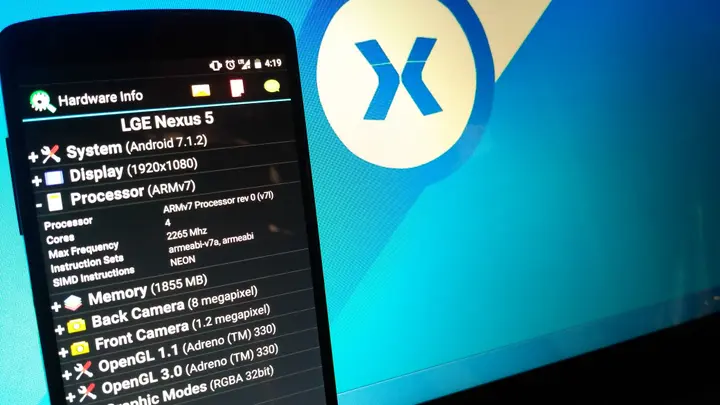
When a download page says just "ARM", it usually means the older 32-bit version (armeabi-v7a). Most older Android phones, like the Nexus 5 in the photo below, used one of these.

What Is ARM64?
ARM64 is the 64-bit version of ARM. You'll also see it called arm64-v8a or AArch64.
In 2017, I wrote that ARM64 was "becoming standard". Today, it is the standard.
If your Android phone came out in the last few years, it's almost certainly ARM64.
What Is x86?
x86 is the processor type in most Windows PCs, made by Intel and AMD. Its 64-bit version is called x86_64 (or x64).
A few years ago, some Android phones used Intel chips. That didn't last.
In April 2016, Intel cancelled its upcoming smartphone chips, and x86 Android phones have been very rare since.
Android still supports x86 and x86_64, but you'll hardly ever find them in a phone today.
Also Read: How to Run Android on Your PC Now That Remix OS Is Gone
In 2017, I wrote that x86 was faster but used more battery. That depended on the chip.
For phones, it doesn't matter anymore.
Can a New Phone Run Old 32-Bit Apps?
Not always. Google has been pushing apps to 64-bit for years:
- August 1, 2019: new apps and updates on Google Play with native code had to include a 64-bit version.
- August 1, 2021: Google Play stopped offering apps without a 64-bit version to 64-bit phones.
Then came the Pixel 7 and Pixel 7 Pro in 2022. Google says they were the first Android phones to launch with support for only 64-bit apps.
So if you try to install an old app that only has a 32-bit version on a 64-bit-only phone, it won't install.
This rarely matters. Almost every app that's still updated has a 64-bit version.
Also Read: SafetyNet Explained: Play Integrity and Why Apps Don't Work on Rooted Phones
How to Check Your Phone's Processor Type
The easiest way is a free app.
In 2017, I used Droid Hardware Info. It's still on the Play Store, but it hasn't been updated since March 2020.
Today, I'd use CPU-Z by CPUID instead. It's updated regularly and shows your chip's name and architecture.
- Install CPU-Z from the Google Play Store.
- Open it and look at the "SoC" tab. It shows your chip's name and architecture.
- Apps name the types a little differently, so match what you see with this list:
- ARM: ARMv7, armeabi-v7a or armeabi
- ARM64: AArch64, ARMv8 or arm64-v8a
- x86: x86, x86_64 or x64
Still not sure? Search for the chip name the app shows.
Any recent phone chip will be ARM64.

CPU-Z shows ads and has in-app purchases, but you don't need to pay to see this. As with any app, check the permissions it asks for before you allow them.
How to Check the Processor Type on a Windows PC
Windows PCs now come with both x64 and Arm processors. To check yours:
- Open "Settings" → "System" → "About".
- Look at "System type" under "Device specifications".
It tells you whether Windows is 64-bit and whether your processor is x64-based or Arm-based. Windows 11 only comes in 64-bit, so you won't see 32-bit there anymore.
What About Windows on Arm PCs?
You can now buy Windows 11 laptops with Arm chips, like Copilot+ PCs with Snapdragon X processors.
Microsoft says most Windows apps work on them. Apps built for Arm run best.
Other apps run through emulation. On Windows 11 version 24H2 and later, that emulator is called Prism.
The catch worth flagging is that not everything works:
- Hardware drivers have to be made for Arm, so some printers and accessories may not work.
- Some games with anti-cheat software don't work.
- Some third-party antivirus apps can't be installed.
So check your important apps and devices before you buy one.
How to Check on a Mac or iPhone
On a Mac, open the Apple menu → "About This Mac".
If you see "Chip", your Mac has Apple silicon. If you see "Processor" with an Intel name, it's an Intel Mac.
iPhones use Apple's own Arm-based chips, and you never have to pick a version when you install an app.
The 2017 Poll Results
When I ran the poll in 2017, 25 of you voted:
- ARM: 48%
- ARM64: 36%
- x86: 16%

Run the same poll today, and I'm pretty sure ARM64 would win by a mile.
Want to see other old polls? Try How Much Screen-On Time Do You Get in a Day? or What Will Android O Be Called?.
Final Thoughts
For a phone, the answer today is almost always ARM64. For a PC, it's x64 or, more and more, Arm.
If you ever have to choose a download, pick the one that matches what CPU-Z or Windows shows you. The one thing to watch is an old app with only a 32-bit version, which won't install on a 64-bit-only phone.
Windows on Arm has limits, so check your important apps and devices before you buy an Arm laptop.
FAQs
How do I check if my Android phone is ARM or ARM64?
Install CPU-Z from the Google Play Store and open the "SoC" tab. A recent phone will show an ARM64 type, such as arm64-v8a or AArch64.
Why won't my old app install on my new phone?
Google says the Pixel 7 and Pixel 7 Pro were the first Android phones to launch with support for only 64-bit apps. An app that only has a 32-bit version won't install on them, though almost every app that's still updated has a 64-bit version.
Do I need to choose a processor type when I install from the Play Store?
No. The Play Store knows your phone and picks the right version for you.
You only choose yourself when you download an app from another website or a developer's GitHub page.
What processor type does my Windows PC have?
Open "Settings" → "System" → "About" and look at "System type" under "Device specifications". It says whether your processor is x64-based or Arm-based.
Still stuck? Tell me through the contact page.