 TechVerge
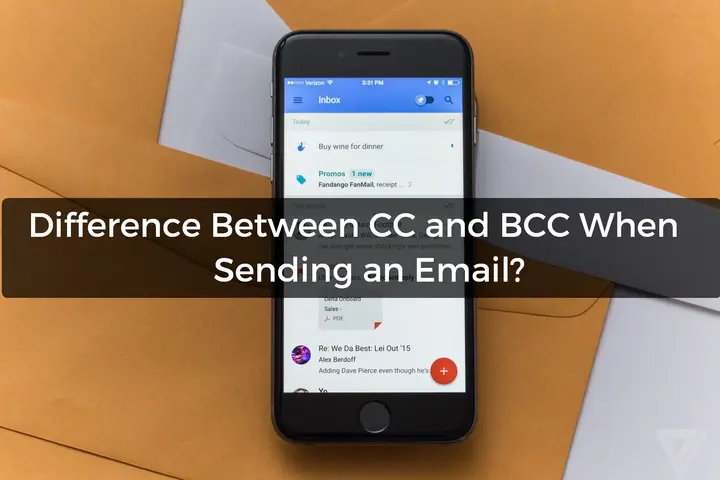
Ever wondered what the Cc and Bcc fields are for?
We all send emails. You fill in To, a Subject and your message, then hit send.
But there are two more fields hiding in there.
The quick answer: Cc sends a copy that everyone can see, and Bcc sends a copy that the other recipients can't see.
In this guide, I'll explain the difference in plain English. You'll also learn when to use each one, how to avoid awkward Reply all moments, and where to find both fields in Gmail, Outlook and the iPhone's Mail app.
Also Read: Why Aren't Keyboard Letters in Alphabetical Order?
TL;DR
- Cc (Carbon Copy) sends a copy to people who need to know. Everyone in To and Cc can see them.
- Bcc (Blind Carbon Copy) sends a hidden copy. The other recipients can't see the people in Bcc.
- Use Bcc for big groups of people who don't know each other, so nobody sees anyone else's address.
- Think before Reply all. If you were in Bcc, a Reply all tells everyone in To and Cc that you got the email.
Cc vs Bcc at a Glance
| Question | Cc | Bcc |
|---|---|---|
| What it stands for | Carbon Copy | Blind Carbon Copy |
| Can the To and Cc recipients see this person? | Yes | No |
| Can this person see the To and Cc recipients? | Yes | Yes |
| Does a Reply all reach this person? | Yes | No |
| Best for | People who need to know, but don't need to act | Big groups who don't know each other |
What Do Cc and Bcc Stand For?
- Cc stands for Carbon Copy.
- Bcc stands for Blind Carbon Copy.
Both names come from the days of paper.
What Is Carbon Paper?
Carbon paper is a thin sheet, usually blue or black, with ink on one side.
You put it between two sheets of paper. Whatever you write on the top sheet gets pressed onto the bottom sheet too.

When people sent copies of a typed letter this way, they wrote "cc:" under the signature, followed by the names of everyone who got a copy.
Email simply borrowed the name.

A Brief History of Email
When I first wrote this in 2017, I said email was introduced in 1972 by Ray Tomlinson. Close, but not quite.
Tomlinson made the first email program on ARPANET, the network that came before the internet, in 1971.
He's also the one who picked the @ sign for email addresses. So every address you type today has a little bit of 1971 in it.
What Is Cc in Email?
When you add someone in Cc, they get a copy of your email. Everyone in To and Cc can see who else got it.
Google puts it simply: Cc is often used for people who don't need to take any action.
Here's an example.
Your boss asks you to email a customer and tell them their complaint has been fixed.
You put the customer in To and your boss in Cc. The customer sees that your boss is in the loop, and your boss sees that you sent it.
What Is Bcc in Email?
Bcc also sends a copy, but it's hidden. Here's how it works in Gmail, according to Google:
- The other recipients won't know you added anyone in Bcc.
- A person in Bcc can see that they were added with Bcc, and can see everyone in To and Cc.
- People in Bcc can't see each other's names or email addresses.
- If people reply all, the people in Bcc won't see the reply.
Here's an example.
My email address is xaif@example.com. You also want to send the same email to Huzaifa, whose address is huzaifa@example.com.
You put both of us in Bcc.
Now I won't know you sent it to Huzaifa, and Huzaifa won't know you sent it to me.
Going back to the customer example: if you don't want the customer to see your boss's email address, put your boss in Bcc instead of Cc.
What's the Difference Between To and Cc?
Both get the exact same email, and both can see each other.
The difference is what it means:
- To is for the people the email is really for. You expect them to read it and maybe reply.
- Cc is for people you're keeping informed.
When Should You Use Cc and Bcc?
When to Use Cc
Use Cc when someone should know about the email, but it isn't mainly for them.
When to Use Bcc
Use Bcc when you send one email to lots of people who don't know each other.
Put your own address in To and everyone else in Bcc. This way, nobody can see anyone else's email address.

Two things to keep in mind, from Microsoft's Outlook help:
- Spammers love Bcc, so some junk filters flag Bcc emails. Make sure people are expecting your email.
- Many email providers limit how many people you can add to one email, and people in Bcc count towards that limit.
If you're emailing a big list regularly, a mail merge or a proper newsletter tool is a better choice.
Also Read: Gmail Dot and Plus Trick: Unlimited Email Aliases From One Inbox
How Reply All Works With Cc and Bcc
Reply all is where most email mistakes happen.
- Reply all goes to the sender and everyone in To and Cc. It never goes to people in Bcc.
- If you were in Bcc, don't hit Reply all. Your reply goes to everyone in To and Cc, and now they all know you got the email.
- Ask yourself if everyone needs your reply. "Thanks!" usually only needs to go to the sender.
- Stop a reply-all storm with Bcc. Microsoft suggests this one: reply to the group, move the big list into Bcc, and ask people to reply only to you.
Is Bcc Really Private?
Mostly, but not completely.
- The people in To and Cc can't see the Bcc list.
- But each Bcc person can see everyone in To and Cc.
- You, the sender, can always see the full Bcc list in your Sent folder.
- Google says people who don't use Gmail may not see that they were added in Bcc. So don't count on them noticing.
One more privacy tip: don't put a big group of strangers in To or Cc.
You're sharing all their email addresses with each other. That's exactly what Bcc is for.
How to Add Cc and Bcc in Gmail, Outlook and iPhone Mail
Gmail on a Computer
- Click "Compose" at the top left.
- Add people in the "To" field.
- Click "Cc" or "Bcc" to add people there too.
- Add a subject, write your message and click "Send".
Gmail App on Android and iPhone
- Tap "Compose" at the bottom right.
- Add people in the "To" field.
- Tap the small arrow at the end of the To field to show "Cc" and "Bcc", then add people there.
- Write your message and tap Send at the top.
Outlook on Windows
Outlook hides the Bcc field until you turn it on. Once it's on, it stays on for new emails.
- New Outlook: open a new email, then go to "Options" → "Show fields" → "Show Bcc".
- Classic Outlook: in a new email window, go to "Options" → "Bcc". If you're writing in the reading pane, select "Bcc" from the ribbon.
Mail on iPhone
- Open the Mail app and start a new email.
- Tap the "Cc/Bcc, From" field.
- Tap "Cc" or "Bcc" and add people.
You can also drag a name from Cc to Bcc if you change your mind.
Want a copy of every email you send? Go to "Settings" → "Apps" → "Mail" and turn on "Always Bcc Myself".
Also Read: How to Create a Self-Destructing Message (6 Easy Ways)
Final Thoughts
Now you know the difference between Cc and Bcc.
Cc keeps people in the loop, and everyone can see them. Bcc keeps people in the loop quietly, and hides their addresses.
Use Bcc for big groups, and think twice before you hit Reply all.
Share this with a friend who still puts 50 people in Cc.
FAQs
What is the difference between Cc and Bcc in email?
Cc sends a copy that everyone in To and Cc can see. Bcc sends a copy that stays hidden from the people in To and Cc, though the Bcc person can still see them.
Can people in Bcc see each other?
No. People in Bcc can't see each other's names or email addresses, but they can see everyone in To and Cc.
Is Bcc completely private?
Not completely. Bcc people can see everyone in To and Cc, and you can always see the full Bcc list in your Sent folder.
Can I move someone from Cc to Bcc?
Yes, in Mail on iPhone. You can drag a name from Cc to Bcc if you change your mind.
Still stuck? Tell me through the contact page.