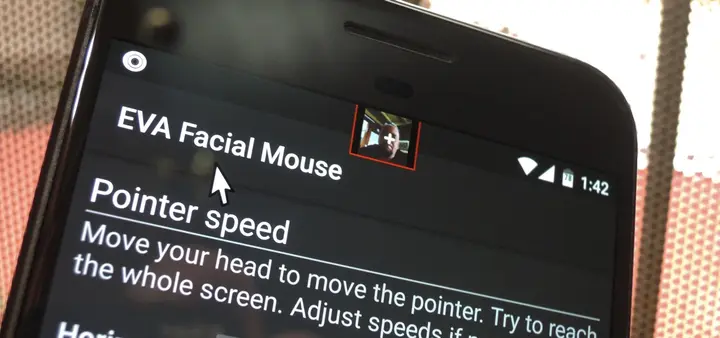
What if you can't, or don't want to, touch your phone's screen?
Every day, you use your phone with your fingers. For some people, that isn't an option.
The short answer: Google's built-in Camera Switches lets you control your Android phone with your head and face, if it has a front camera and runs Android 6 or later. No root is needed, and on most phones you don't need a third-party app either.
In this article, I'll show you what has changed since my first version, how Camera Switches works and how to set it up. I'll also cover the other Google options for hands-free control.
Also Read: 13 Cool Things You Didn't Know Your Android Could Do
TL;DR
- Best option: Camera Switches, in Google's free Switch Access app. Face gestures move a highlight and select items across the whole phone.
- Requirements: An Android 6 or later phone with a front camera, plus a stand or mount that keeps it secure.
- Setup: Go to "Settings" → "Accessibility" → "Switch Access" and run the setup guide.
- Other Google options: Project Activate turns facial gestures into actions, and Voice Access works if you can speak.
- Dead ends: EVA Facial Mouse is no longer on Google Play. Project Gameface has no ready-to-install app.
What Has Changed Since EVA Facial Mouse
When I first wrote this, I used an app called EVA Facial Mouse, made by the Vodafone Foundation in Spain.
I tested it on my Nexus 5 with Android 7.1.1 and on MIUI 8.
You moved your head, and a cursor moved on the screen. It felt like magic.
Here's the bad news. EVA Facial Mouse is no longer on Google Play, and its code on GitHub hasn't been updated since 2020.
The good news is that Google now builds this into Android. It's called Camera Switches, and it's part of Google's free Switch Access app.
Head Control Options at a Glance
| Option | What it does | Best for |
|---|---|---|
| Camera Switches (Switch Access) | Face gestures move a highlight and select items | Controlling the whole phone with your head |
| Project Activate | A facial gesture triggers an action, such as speaking a phrase | Speaking, playing audio, sending texts or making calls |
| Voice Access | Voice commands control the phone | Hands-free control if you can speak |
| Project Gameface | Head-moved cursor and facial expressions | Developers building their own cursor apps |
What Is Camera Switches?
Camera Switches turns your face into buttons.
Your phone's front camera watches for simple gestures and uses them to move around the screen and select things.
According to Google's help page, you can use gestures like:
- Look left
- Look right
- Look up
- Smile
- Open your mouth
- Raise your eyebrows
You give each gesture a job, like "move to the next item" or "select". The best part is that it works across the whole phone, not just in one app.
How to Control Your Android With Your Head
Camera Switches is the main way to control your Android with your head. Check the requirements first, then follow the steps.
Requirements
- An Android phone running Android 6 or later, with a front camera.
- Google's Switch Access app. It used to be part of Android Accessibility Suite. Google has since moved it into its own app, so if you don't see it, install "Switch Access" from the Play Store.
- A phone stand or mount. Google says the phone should be secure, charged, and have a clear view of your face.
- Someone to help with the first setup, if you can't tap the screen yourself.
One more thing: you can't use Camera Switches while another app is using the camera.
Step-by-Step Setup
- Open "Settings" → "Accessibility" → "Switch Access". Depending on your phone, it's under "Interaction controls" or "Downloaded apps".
- Turn on "Use Switch Access" and allow the permissions it asks for.
- Tap "Settings" → "Setup guide".
- Choose "Camera Switch" and tap "Next".
- Choose "Two switches" and tap "Next".
- Choose "Linear scanning" and tap "Next".
- Follow the on-screen steps to give a face gesture to each action, like scan, pause and select.
Once it's set up, a highlight moves through the items on your screen. Use your "scan" gesture to move it, and your "select" gesture to tap.
Make Camera Switches More Comfortable
If gestures trigger by accident, or you have to make them too big, go to Switch Access settings → "Camera switch settings".
There you can change:
- Gesture size: how big a smile or a look has to be.
- Gesture hold time: how long you have to hold it.
Switch Access also has "Point scan", which lets you pick an exact spot on the screen to tap, swipe or zoom. It's the closest thing to EVA's old cursor.
How to Turn Camera Switches Off
Go to "Settings" → "Accessibility" → "Switch Access" and turn off "Use Switch Access".
Project Activate: Talk With Facial Gestures
Project Activate is another free app from Google. Instead of moving around the phone, it turns a facial gesture into an action.
Google says a gesture can:
- Speak a phrase out loud
- Play an audio file
- Send a text message
- Make a phone call
It's made for people who can't speak or use their hands. To set it up, open the app, allow the camera, and add a "New Shortcut" for each gesture.
Google notes that Project Activate is only available in English, and you need a phone plan for calls and texts.
Also Read: How to Get iPhone X Animojis on Any Android Device
Voice Access: Another Hands-Free Option
If you can speak, Google's Voice Access lets you control your whole phone with your voice.
You can say things like "Open Gmail", "Scroll down" or "Go home". To start it, open the Voice Access app or say "Hey Google, start Voice Access".
Also Read: How to Enable Multiple User Accounts on Android
Is There a Head-Controlled Cursor on Android?
You might be wondering whether anything moves a cursor with your head, like EVA did.
Google built one. It's called Project Gameface.
In May 2024, Google open-sourced the Android version. It moves a virtual cursor with your head and uses facial expressions to tap, go home, open notifications and more.
There's no ready-to-install app, though. Google only shared the code for developers to build with Android Studio, and the GitHub project was archived on September 5, 2025.
So for most people, Camera Switches is the way to go.
Which Option Should You Use?
It depends on what you need:
- Control the whole phone with your head: Camera Switches in Switch Access.
- Trigger speech, audio, texts or calls with a face gesture: Project Activate.
- Control the phone by voice: Voice Access.
- Build your own head-controlled cursor: Project Gameface, for developers only.
Final Thoughts
In 2018, controlling your phone with your head needed a special app from a small team.
Today, it's built into Google's own accessibility tools, and it's free. Mount your phone, run the Camera Switches setup guide, and take your time finding gestures that feel natural to you.
Menu names can differ between phone makers and Android versions, so the labels on your phone may look a little different. Look for the same Switch Access and Camera Switch options.
FAQs
Can I control my Android phone with just my head?
Yes. Turn on Camera Switches in Google's free Switch Access app, then give a face gesture to scan, pause and select.
Do I need root or a third-party app for head control?
No root is needed. Camera Switches is part of Google's free Switch Access app, so on most phones you don't need a third-party app.
What happened to EVA Facial Mouse?
EVA Facial Mouse is no longer on Google Play, and its code on GitHub hasn't been updated since 2020. Camera Switches in Switch Access is the built-in replacement.
Is there a Google app that moves a cursor with my head?
Google's Project Gameface does this, but it isn't a ready-to-install app. Google only shared the code for developers, and the GitHub project was archived on September 5, 2025.
Why won't Camera Switches start?
Camera Switches can't run while another app is using the camera. Close the other app, then try again.
Still stuck? Tell me through the contact page.

Topics
Comments (6)
Comments are closed. Have a question about this article? Ask through the contact page.

Really Interesting
What issues you find in the application?
Good one....just have some minor issues within app... Thanks for sharing ????
Thanks
Bro I am not getting the option of Virtual keyboard under Language and input...????
Check the video tutorial once