 TechVerge
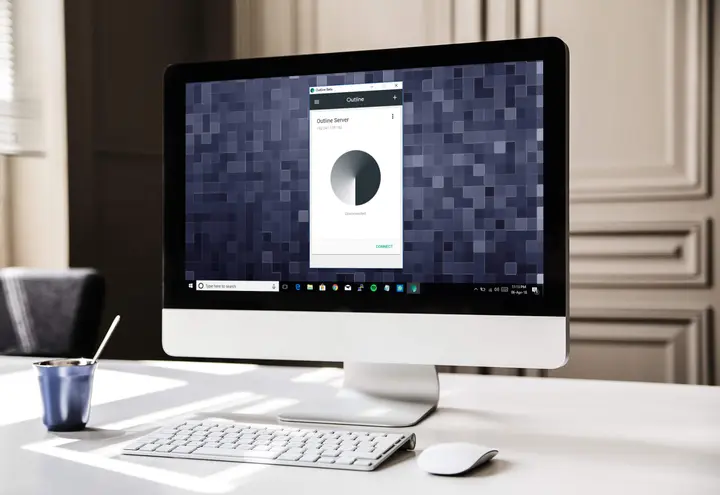
Ever wondered who's behind the VPN app on your phone?
Most of the time, you don't really know who runs the servers or who can see your data. So why not run your own?
Short answer: the easiest way is Outline, which sets up a server for you on a cloud provider. If you don't want to rent a server, Tailscale or your router can do the job from your home internet.
When I first wrote this in 2018, I used Outline with a server from DigitalOcean. It's still the easiest way.
Today, you have more choices, and one of them doesn't need a rented server at all.
In this guide, I'll show you how to create your own VPN, step by step, and what a personal VPN can and can't hide. Then, if someone asks which VPN you use, you can tell them you made your own.
Also Read: How to Unblock Blocked Websites on Android (3 Safe Ways)

TL;DR
- Easiest: Outline, with a server that costs US$6 per 30 days on DigitalOcean.
- Home internet while you're away: Tailscale's exit node (free Personal plan) or your router's VPN server.
- Command line lovers: WireGuard on a cloud server.
- What it can't do: a personal VPN doesn't make you anonymous. Your server's provider still knows who pays for it.
What Is a VPN?
VPN stands for Virtual Private Network.
When you turn it on, your phone or computer sends all its internet traffic through an encrypted tunnel to a VPN server. From there, the traffic goes out to the internet.
So websites and apps see the server's IP address, not yours.
Here's an example. You're travelling abroad, and your bank's app only works from your home country.
Connect to a VPN server back home, and it works again.
In 2018, my example was Spotify. It wasn't available in India back then, so people used a VPN to open it.

Why Create Your Own VPN?
Outline's team puts it well: with most VPN providers, you don't always know who controls the VPN and who has access to your data.
When you run your own, you control the server.
What about free VPN apps? Servers cost money.
If a company pays for servers and gives you the VPN for free, it has to make that money back somehow. Read its privacy policy before you send it all your traffic.
Create Your Own VPN at a Glance
| Method | Best for | Cost | Difficulty |
|---|---|---|---|
| Outline + a cloud server | Most people | US$6 per 30 days for a DigitalOcean server | Easy |
| Tailscale exit node | Using your home internet while you're away | Free Personal plan | Easy |
| Your router's VPN server | Routers that have one built in | Free | Easy to medium |
| WireGuard on a cloud server | People who like the command line | From about $4 a month for the server | Advanced |
What Can Your Own VPN Hide (and What Can't It Hide)?
A personal VPN is great for privacy on public Wi-Fi, but it doesn't make you anonymous.
It hides:
- Your traffic from the Wi-Fi network you're on, like in a café or hotel.
- The websites you visit, from your internet provider. It only sees an encrypted connection to your server.
- Your real IP address from the websites you visit.
It doesn't hide:
- Who you are from your cloud provider. The company you rent the server from knows who's paying for it.
- Your traffic from the server's network. After your traffic leaves the server, it's like any other internet traffic.
- You from websites you log into. Your Google or Facebook account still knows it's you.
- The fact that it's a VPN. Your server's IP address is used only by you, and it isn't anonymous. Some streaming services also block VPNs. Netflix, for example, shows a "You seem to be using a VPN or proxy" error, and says VPNs aren't supported on its ad-supported plans.
Is It Legal?
VPN rules are different from country to country, and some governments restrict them. Check the rules where you live.
Also check the terms of the services you use. If you share your VPN with friends, remember that whatever they do online will look like it came from your server.
Also Read: 5 Best Firewall Apps for Non-Rooted Android Phones in 2026
How to Create Your Own VPN With Outline (Easiest)
This is the method from my original guide.
Outline was launched in 2018 by Jigsaw, a team inside Google. Today, it's run by the Outline Foundation, an independent non-profit, and it's open source.
It has two apps:
- Outline Manager sets up your server and creates access keys. It runs on Windows, macOS and Linux.
- Outline Client connects your devices. It's on Android, iPhone, Windows, macOS, Linux and ChromeOS.
Under the hood, Outline uses Shadowsocks, which is built to be hard to block.
Requirements
- A Windows, Mac or Linux computer for Outline Manager.
- An account with a cloud provider, like DigitalOcean, Google Cloud or AWS. You'll need a payment method.
Steps
- Download Outline Manager from the official site, getoutline.org, and install it.
- Open it and choose your cloud service. DigitalOcean is the easiest. Sign in or create an account when it asks you to.
- Choose where you want your server to be. This is where your internet connection will appear to come from.

When I first set this up in 2018, I chose Singapore, because I was using it to log in to my Spotify account.
- Wait a few minutes while Outline creates and sets up your server.
- In Outline Manager, click "Add new key" to create an access key for each person or device.
- Share the key with yourself or a friend. Outline Manager has a "Copy access key" button for this.
- Install Outline Client on your phone or computer from the App Store, Google Play or the Outline website.
- Open it, tap "Add server", and paste the access key.
- Tap "Connect". On Android, allow the VPN connection request when it pops up.
You're now connected to your own VPN.
To check it, search for "what's my IP" on Google. You should see your server's IP address instead of your own.

How Much Does It Cost?
When you create a server through Outline Manager, it tells you the DigitalOcean server costs US$6 per 30 days with 1 TB of data transfer.
You can delete the server whenever you want.
Sharing With Friends
This is one of my favorite things about Outline.
You can make a separate key for each friend, and they connect with the same Client app. Outline Manager also lets you set a data limit for each key, so one person can't use up all your data.
Already Have a Server?
If you already rent a Linux server, from a company like Vultr or Linode, you can use it instead.
- In Outline Manager, choose "Set up Outline anywhere".
- Log in to your server and run the command Outline Manager shows you.
- Copy the output it gives you and paste it into Outline Manager.
- Open the firewall ports Outline asks for.
Then create keys and connect, just like above.
Also Read: How to Use Telegram When It's Blocked in Russia, Iran or Pakistan
How to Use Your Home Internet With Tailscale (No Server to Rent)
This method is new since my original guide. It's a good fit if you want your home internet connection while you're away.
Tailscale connects your devices into a private network using WireGuard. Any computer in that network can act as an exit node, which means your other devices send all their internet traffic through it.
Its Personal plan is free for up to six users, and exit nodes work on every plan.
Requirements
- A computer at home that stays on (Windows, Mac or Linux).
- The Tailscale app on that computer and on your phone, signed in to the same account.
Steps
- Install Tailscale on your home computer and your phone, and sign in with the same account on both.
- On the home computer, turn on the option to run it as an exit node.
- Open the Tailscale admin console in your browser, go to the "Machines" page, open the menu next to that computer, choose "Edit route settings" and turn on "Use as exit node".
- On your phone, open Tailscale, go to the "Exit Node" section and choose your home computer.
Websites now see your home IP address.
To stop, choose "None" in the Exit Node section.
A few things to know:
- Your home computer has to stay on and connected.
- Your traffic leaves through your home internet, so your home internet provider can still see it.
- You can run an exit node on an Android phone too, but Tailscale itself says it's not fast enough for most uses.
How to Use Your Router's Built-In VPN Server
Some home routers can act as a VPN server, so you don't need any extra hardware.
Look in your router's settings for something like "VPN Server". Every brand does it differently, so here's ASUS as an example.
Requirements
- A router that supports a VPN server. On ASUS, WireGuard needs firmware 3.0.0.4.388 or later.
- A public IP address from your internet provider. If your provider shares one IP between many customers, your phone can't reach your router from outside. Ask your provider if you're not sure.
Steps on ASUS
- Open your router's settings page in a browser and log in.
- Go to "VPN" → "VPN Server", turn it on, and click "WireGuard VPN".
- Add a new client and click "Apply".
- Install the WireGuard app on your phone and scan the QR code the router shows you.
On iPhone, ASUS says you need to set a DNS server in the WireGuard app before you can browse.
This one is free, and your traffic goes out through your home internet, just like Tailscale.
How to Set Up WireGuard on a Cloud Server (Advanced)
If you're comfortable with the command line, this gives you full control.
WireGuard is a fast, modern VPN that runs on Windows, macOS, Linux, Android and iPhone.
DigitalOcean's basic servers start at $4 a month, with at least 500 GiB of outbound data transfer included.
Requirements
- A cloud server running Ubuntu.
- The WireGuard app on your phone or computer.
Steps
- Log in to your server and install WireGuard:
sudo apt install wireguard
- Make a key pair for the server, and another for your phone:
umask 077
wg genkey | tee server_private | wg pubkey > server_public
wg genkey | tee phone_private | wg pubkey > phone_public
- Create
/etc/wireguard/wg0.confon the server. Replace the keys with the contents of the files you just made, andeth0with your server's network interface if it's different:
[Interface]
Address = 10.8.0.1/24
ListenPort = 51820
PrivateKey = SERVER_PRIVATE_KEY
PostUp = iptables -t nat -A POSTROUTING -o eth0 -j MASQUERADE
PostDown = iptables -t nat -D POSTROUTING -o eth0 -j MASQUERADE

[Peer]
PublicKey = PHONE_PUBLIC_KEY
AllowedIPs = 10.8.0.2/32
- Let the server forward traffic, then start WireGuard:
echo "net.ipv4.ip_forward=1" | sudo tee /etc/sysctl.d/99-wireguard.conf
sudo sysctl --system
sudo systemctl enable --now wg-quick@wg0
- Allow UDP port 51820 in your server's firewall.
- Make a config for your phone and import it into the WireGuard app:
[Interface]
PrivateKey = PHONE_PRIVATE_KEY
Address = 10.8.0.2/32
DNS = 1.1.1.1

[Peer]
PublicKey = SERVER_PUBLIC_KEY
Endpoint = YOUR_SERVER_IP:51820
AllowedIPs = 0.0.0.0/0
Turn it on in the app, and check "what's my IP" again.
For more details, read the official WireGuard quick start.
Which Method Should You Choose?
It depends on what you need:
- You want it to just work: use Outline. It's the easiest method.
- You want your home connection while travelling: use Tailscale or your router's VPN server.
- You love the command line: use WireGuard, which gives you full control.
Final Thoughts
If you just want it to work, go with Outline. It's still the easiest, just like it was when I first wrote this in 2018.
If you want your home connection while you travel, try Tailscale or your router's VPN server. The main catch is that your home computer has to stay on and connected.
Whichever you pick, remember what a VPN can and can't hide, and use it within the law where you live.
Share this with friends who are curious about VPNs.
FAQs
How do I create my own VPN?
The easiest way is to install Outline Manager and let it set up a DigitalOcean server, which it says costs US$6 per 30 days. Then add an access key to Outline Client on your phone and connect.
Is my own VPN completely anonymous?
No. The company you rent the server from still knows who pays for it, and websites you log into still know it's you.
Can I use my home internet through a VPN while I travel?
Yes, with a Tailscale exit node or your router's built-in VPN server. Your home computer or router has to stay on, and your home internet provider can still see your traffic.
Is it free to run my own VPN?
Not entirely. Tailscale's Personal plan and a router's VPN server are free, but a cloud server costs money, starting at $4 a month on DigitalOcean.
Still stuck? Tell me through the contact page.